



Debut: Delhi 2010. For 16 years, Rwanda has turned up on the Commonwealth Video games with hope, ambition and more and more aggressive athletes. Every version introduced close to misses, but additionally encouraging performances.
Even so, there was all the time the idea that historical past would, in the future, lastly be made. In Glasgow 2026, that lengthy wait got here to an finish. Rwanda has lastly gained a medal on the Commonwealth Video games.
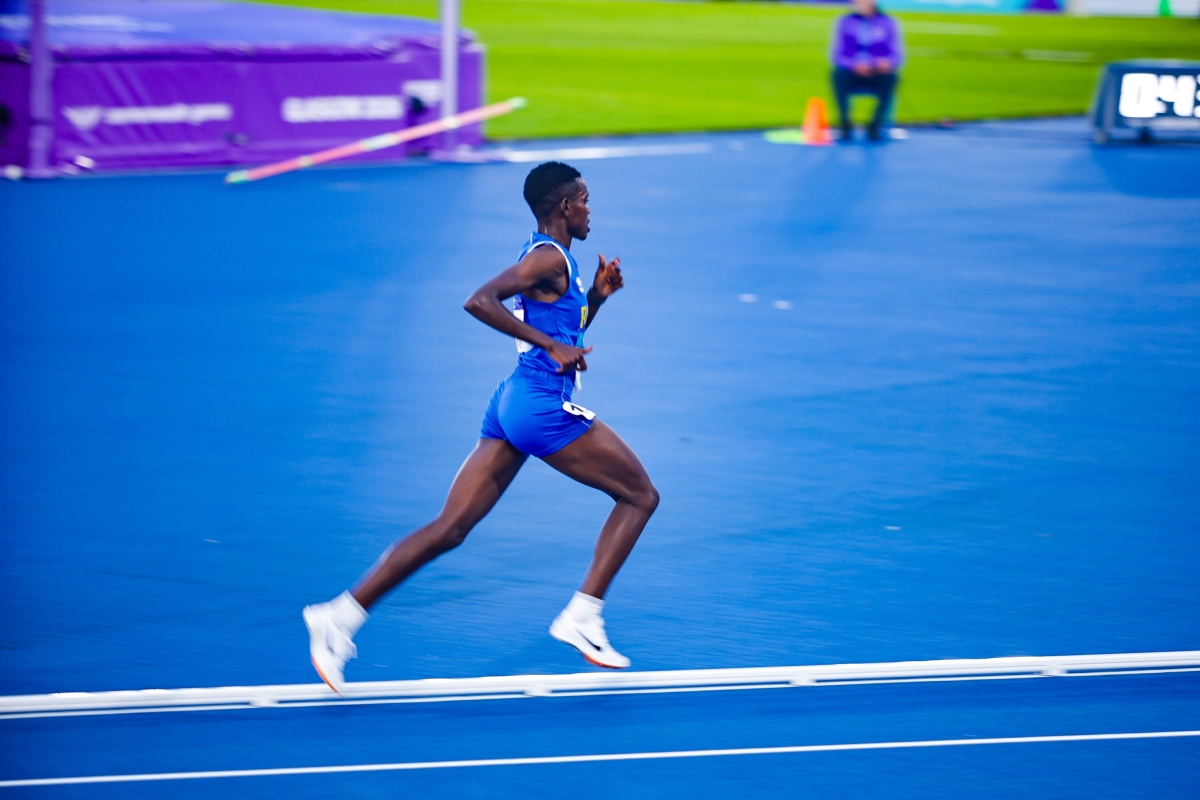
Florence Niyonkuru's bronze medal within the girls's 10,000 metres was, from Rwanda's perspective, value excess of a spot on the rostrum. It broke a long-standing jinx. It was historic.
ALSO READ: Niyonkuru ends Rwanda’s C’wealth Video games jinx with historic bronze
It’s a medal that rewrites Rwanda's sporting narrative on the Commonwealth Video games, ending a protracted drought in worldwide athletics. It proves that Rwandan athletes can lastly compete with the standard distance-running powerhouses.
Niyonkuru crossed the end line in 31:55.47, simply 0.23 seconds forward of Uganda's Esther Chebet to safe bronze behind Australia's Rose Davies (gold) and Kenya's Diana Wanza (silver).
The importance of that slender margin between bronze and fourth place extends properly past the stopwatch. It represents the distinction between one other chapter of “what may need been” and one of many biggest moments in Rwandan athletics.
Since making its Commonwealth Video games debut in Delhi in 2010, Rwanda had turn out to be all too aware of frustration, as has been the case at different main championships.
Nonetheless, there have been performances that hinted at promise with out delivering medals. That yr, as an example, world Para-athletics champion Hermas Muvunyi completed sixth within the males's T46 100 metres.
ALSO READ: Rwanda’s Niyonkuru wins gold in Bengaluru
Seashore volleyball duo Olivier Ntagengwa and Venuste Gatsinzi reached the bronze-medal match on the Birmingham Video games in 2022, solely to fall one step brief. Yves Nimubona's fifth-place end within the 5,000 metres confirmed progress, although not but the breakthrough. Nonetheless, it was an indication of issues to return.
Repeatedly, Rwanda discovered itself knocking on the door with out ever strolling by it. That’s the reason Niyonkuru's achievement issues so deeply, for it breaks a psychological barrier as a lot as a statistical one. Hopefully, this would be the first of many.
Each profitable sporting nation has a defining second that adjustments expectations. Earlier than that first medal, athletes typically compete hoping to make finals or end respectably. Afterwards, they start competing to win. Rwanda has now crossed that invisible line.
To place this bronze into historic perspective, one solely has to think about that Niyonkuru's accomplishment has come the place a few of Rwanda's best athletes couldn’t.
For years, Dieudonné Disi carried the nation's distance-running hopes nearly single-handedly.
His profession stays some of the outstanding in Rwandan athletics, and to a sure diploma, East African athletics. It included quite a few worldwide races, a number of podium finishes, and appearances on the Olympic Video games and World Championships.
Disi's private better of 59:32 within the half marathon cemented his legacy as Rwanda's biggest male distance runner. But even he, regardless of his outstanding consistency in a profession spanning greater than a decade, by no means gained a medal at a significant international championship.
That reality alone underlines the size of Niyonkuru's achievement. She has not diminished Disi's legacy. As a substitute, she has constructed upon the inspiration that he and others earlier than him, resembling Mathias Ntawulikura, laid.
Ntawulikura participated in a joint African report 5 Olympic Video games—1988, 1992, 1996, 2000 and 2004. A report he shares with three different observe and subject athletes: Nigerian Mary Onyali, Mozambican Maria Mutola and Angolan João N'Tyamba.
We should additionally recognise that each technology wants pioneers, and each pioneer hopes somebody will ultimately go one step additional. Niyonkuru has executed exactly that.
For the uninitiated, Niyonkuru's bronze shouldn’t be seen as a lucky one-off. It’s the newest chapter in a season that has established her amongst Africa's elite distance runners.
A nationwide half-marathon report in Berlin, victory on the prestigious TCS World 10K Bengaluru and silver on the African Championships all pointed to an athlete quietly reaching maturity.
Glasgow merely confirmed what the athletics world had already begun to recognise.
Equally encouraging is what her success says about the way forward for Rwandan athletics.
The nation has by no means lacked expertise. John Hakizimana, Epiphanie Nyirabarame, Gervais Hakizimana, Robert Kajuga, Felicien Muhitira and plenty of others have represented Rwanda with distinction over time.
What was lacking was that defining championship breakthrough that might encourage the subsequent technology to consider medals have been attainable somewhat than merely aspirational.
Niyonkuru's success ought to give hope and perception to younger Rwandan runners, who now have tangible proof that they will stand on a significant championship podium. The 24-year-old is coached by Jean Pierre Ndacyayisenga.
From this second, Rwandan coaches have validation that their coaching strategies can produce world-class athletes, whereas the Rwanda Athletics Federation (RAF) has contemporary proof that funding in athletics can yield worldwide success.
Momentum issues in sport. One medal typically turns into two, then 5, then a tradition of expectation. These in cost have to construct on this Commonwealth Video games bronze and method future international championships with real function.
As a scholar of historical past, I do know that nations not often cease at their first breakthrough, and one hopes Rwanda follows an identical path.
Kenya, Ethiopia and Uganda all started with pioneers earlier than growing sustained traditions of excellence. Rwanda remains to be a long way from becoming a member of that firm, however each journey begins with a single step. On this case, it’s a landmark one.
Fortuitously for Rwanda, Niyonkuru has delivered that landmark. Her bronze medal will without end occupy a novel place in Rwanda's sporting historical past—not as a result of it’s bronze, however as a result of it’s the first.
Niyonkuru is the speak of the city, and deservedly so. Whereas some would possibly say it’s “solely” a bronze, from Rwanda's perspective the color of the medal is just irrelevant.
Its true worth lies in what it represents. It ends years of frustration and disappointment—the breaking of an everlasting jinx. Has Rwanda arrived on the prime desk? It’s nonetheless too early to guage.
But, for the optimists, it marks the start of a future wherein Rwanda's athletes not journey to main championships merely hoping to compete however believing they will win.
That change in perception might in the end show to be Niyonkuru's biggest legacy. At 24, the African Championships silver medalist nonetheless has nearly her complete profession forward of her. All she wants now could be so as to add consistency to her quickly rising CV.


